One Less Thing to Remember
Parentzia helps you keep everything about your kids organized—without juggling apps or mental notes.
Join the early access list and see how calm organization feels.

Parentzia helps you keep everything about your kids organized—without juggling apps or mental notes.
Join the early access list and see how calm organization feels.
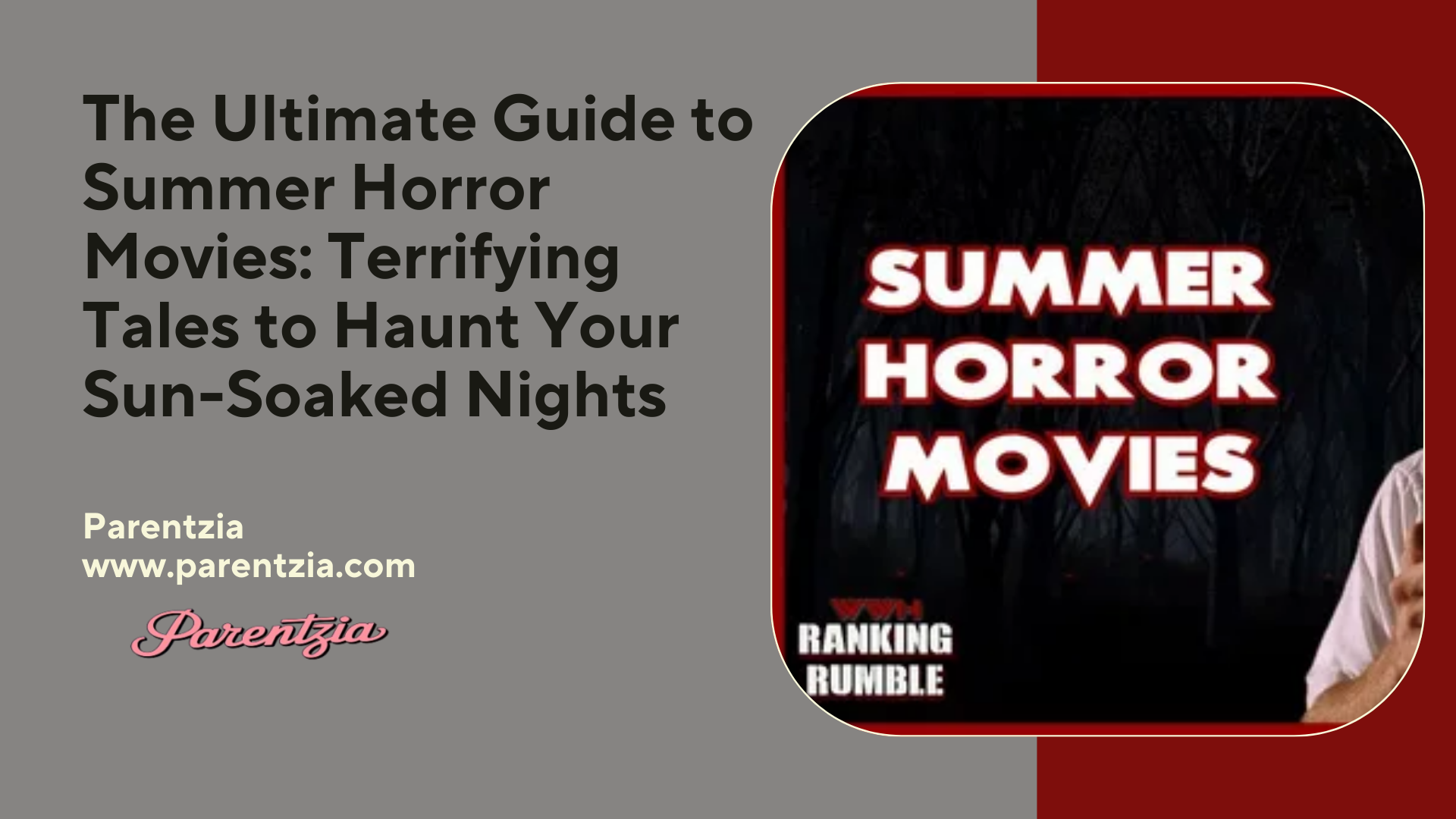
Summer is supposed to feel carefree. You think of beaches, long road trips, camping under the stars, and late-night parties. Yet filmmakers have always loved turning that warm, nostalgic season into the stage for absolute terror. Summer horror movies tap into fears you only experience when the sunlight overstays, when heat turns suffocating, and when isolation turns dangerous.
This guide explores some of the best summer horror films, breaking down each movie’s themes, cultural impact, and why it belongs in the canon of horror movies set in summer. You’ll also find fun facts, streaming suggestions, and a comparison table to help you choose the perfect scary summer movie night.
you might also like ” Hurricane Movies: The Ultimate Guide to Storm‑Driven Cinema ️”
Summer horror works because it feels deeply familiar.
People go on vacation. They try new things. They get careless. And that’s when terror becomes believable.
Many scary summer movies use themes like:
Several summer thriller movies even weaponize sunlight. Instead of hiding horror in shadows, they amplify it with bright, merciless daylight, like in Midsommar.
Researchers studying fear responses note that “unexpected contrast” makes horror more disturbing. Sun + violence = cognitive dissonance.
In other words, summer horror films scare you because they violate the safety you expect from the season.
Steven Spielberg didn’t just make a movie—he changed beach culture forever.
Jaws helped launch the modern blockbuster and created a new fear: the “unknown beneath the waves.”
Why it’s essential to summer horror:
The shark attacks happen in broad daylight, turning summer joy into seaside carnage. After its release, coastal towns reported real-world beach attendance declines, proving cinema can alter behavior.
This remains the absolute cornerstone of:
Before Jason became a supernatural tank, the first film gave audiences a dark look at camp horror movies and summer tragedy.
Why it changed the genre:
Camp Crystal Lake transformed overnight into the symbol of woods and forest horror films.
Every “cabin in the woods” movie since owes it a debt.
Few 80s summer slashers capture oppressive heat like this film.
Sweat, grime, road trips, and cannibalistic strangers create a sensory nightmare.
The movie also pioneered a subgenre:
Its grainy aesthetic wasn’t a stylistic choice—it was filmed on a shoestring budget in 100+ degree Texas heat. Everyone was miserable, which translated perfectly on screen.
Wes Craven took the American vacation fantasy and turned it savage.
Themes relevant to summer horror films:
Its legacy remains visible in every modern desert survival horror story.
If Jaws made you afraid of sharks, Piranha made you fear everything else in the water.
With its exploitation tone and brutal kills, this movie carved space for:
Despite low budget, it influenced decades of water-based horror.
Ari Aster built an entire cult film around a Swedish midsummer festival, using aesthetics as a weapon.
No shadows. No night. No break from tension.
Why it stands out:
Fright doesn’t hide here. It smiles at you.
Critics praised its commentary on:
This is one of the best horror movies for summertime marathons if you prefer unease over jump scares.
Jordan Peele merges social commentary with a terrifying premise: doppelgängers who want to replace you.
It’s notable for:
It nails what many summer horror movies aim for:
The idea that the wrong moment can shatter your safety.
Part romance, part horror, part existential Americana.
This film isn’t strictly labeled a summer thriller movie, but it embodies:
The violence is shocking but intimate, grounded in human hunger—metaphorical and literal.
This gruesome modern slasher is soaked in sweat, heat, and blood.
Filmed in rural Texas, it examines:
Its retro aesthetic honors classic summer slasher films but adds emotional weight.
A hurricane traps privileged young adults in a mansion with deadly consequences.
It’s:
A perfect example of teen summer horror films colliding with social media culture.
Surf culture meets gothic swagger.
This seaside horror film invented the sexy vampire aesthetic.
It’s also saturated in summer imagery:
Few scary summer movies are this stylish.
A love letter to misunderstood rednecks.
This movie flips expectations:
Gore + humor = a refreshing twist on summer cabin horror movies.
A spoof that understands slasher tropes so well it actually becomes suspenseful.
It belongs among:
And it never takes itself too seriously.
Funny, touching, and visually inventive.
It honors the campground horror films of the 80s while giving its characters emotional arcs.
A group of tourists visit Mayan ruins—bad idea.
The killer isn’t a monster, but a sentient plant, which makes the movie uniquely horrifying.
Themes:
This is one of the most disturbing summer vacation horror movies ever made.
A group of friends rent a cabin. A disease spreads. Society collapses.
This is:
And a harsh reminder that isolation rarely ends well.
Sam Raimi’s breakout film is kinetic chaos.
It birthed:
You can trace modern woods and forest horror films back to it.
A satirical love letter to fans.
It breaks down:
Yet still delivers genuine scares.
Think Stranger Things, but darker and more cynical.
It examines:
It nails the tone of summertime scary films with moral weight.
A thrilling tribute to:
It blends old-school violence with modern energy.
A defining entry in beach horror movies.
Gossip, lies, and a killer with a hook.
Summer becomes a curse they can’t outrun.
Minimalist but unforgettable.
Its themes are heavy:
It turns horror movies set at a lake and suburban summer into existential dread.
School’s out, but the monster is awake.
Childhood unity and fear culminate in one of the best summer-themed scary movies of the decade.
Spike Lee depicts the 1977 New York blackout and Son of Sam murders.
The city feels:
A stark example of heatwave horror films rooted in truth.
Bright daylight, dark humor.
The camp musical sequence remains iconic satire.
This isn’t gory, but it fits perfectly into summer camp slasher films thematically.
| Movie | Year | Setting | Sub-Genre | Tone |
| Jaws | 1975 | Beach | Creature | Suspense |
| Friday the 13th | 1980 | Camp | Slasher | Brutal |
| Midsommar | 2019 | Festival | Folk | Surreal |
| X | 2022 | Rural | Slasher | Gory |
| The Lost Boys | 1987 | Coast | Vampire | Stylish |
| Us | 2019 | Beach town | Thriller | Psychological |
| Cabin Fever | 2003 | Woods | Infection | Body horror |
Summer horror films thrive on:
Sunshine becomes a trap.
Beauty hides violence.
Relaxation creates vulnerability.
For gore:
For beach vibes:
For psychological horror:
For fun parties:
For nostalgic chills:
(Platforms change—check:
Summer horror exposes the fragility of freedom. You step outside your routine, and suddenly the world becomes unpredictable.
These films hold cultural power because they remind you that danger doesn’t disappear just because you’re on vacation.
Heat, sunlight, and celebration create a strange contrast with murder and fear—making the horror more visceral.

